
Free Practice Diagrammatic Reasoning Tests
Updated November 15, 2023


Diagrammatic reasoning questions measure your ability to:
- Infer rules from a diagram and then apply those rules to a new situation
- Follow a series of logical instructions presented using symbols
- Follow flowchart or pseudo-code logic
Diagrammatic Reasoning – Free Online Practice Test
Download Diagrammatic Reasoning – Practice Test
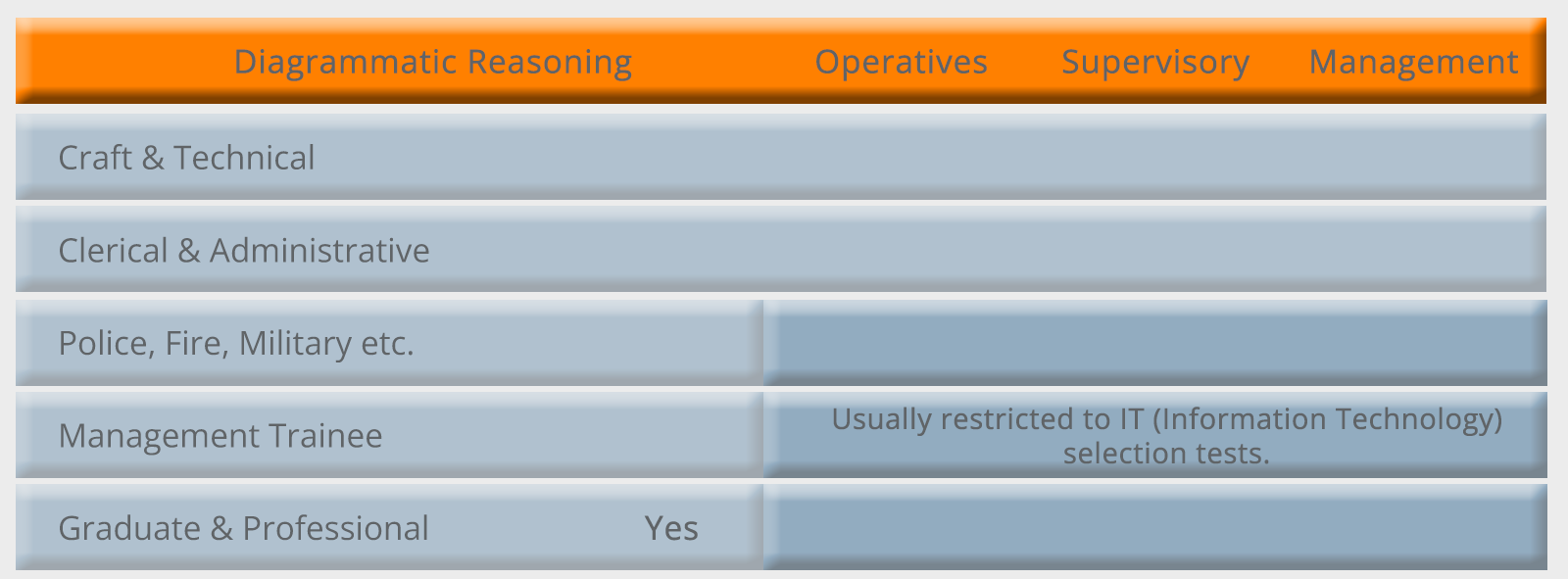
These types of questions can appear in other types of test but they are particularly suited to information technology jobs in which analysts and programmers need to be able to work through complex problems in an analytical way.
Practice Diagrammatic Reasoning Test with JobTestPrep

This sample question paper contains 40 questions and has a suggested time limit of 10 minutes.
The questions are presented in Letter/A4 format for easy printing and self-marking.
It is not always easy to assess whether someone has the analytical ability needed to succeed in a technical job in the information technology industry.
Many people who are regarded as 'intelligent' and who have good academic qualifications find this kind of pure analytical thinking both alien and difficult.
If you need to prepare for a number of different employment tests and want to outsmart the competition, choose a Premium Membership from JobTestPrep.
You will get access to three PrepPacks of your choice, from a database that covers all the major test providers and employers and tailored profession packs.
It is widely accepted in the IT industry that a 'natural' programmer can be many times more productive than someone who does not share this 'natural' ability.
It is not surprising therefore that diagrammatic reasoning tests are used extensively to select software developers.