Work Sample Tests
Updated November 15, 2023


Work sample tests involve a sample of the work that you will be expected to do.
This may be mechanical, for example, repairing a piece of equipment.
It may involve a specific skill, for example, a typing exercise where you need to demonstrate your ability to type at or above a set speed whilst making less than a given percentage of errors.
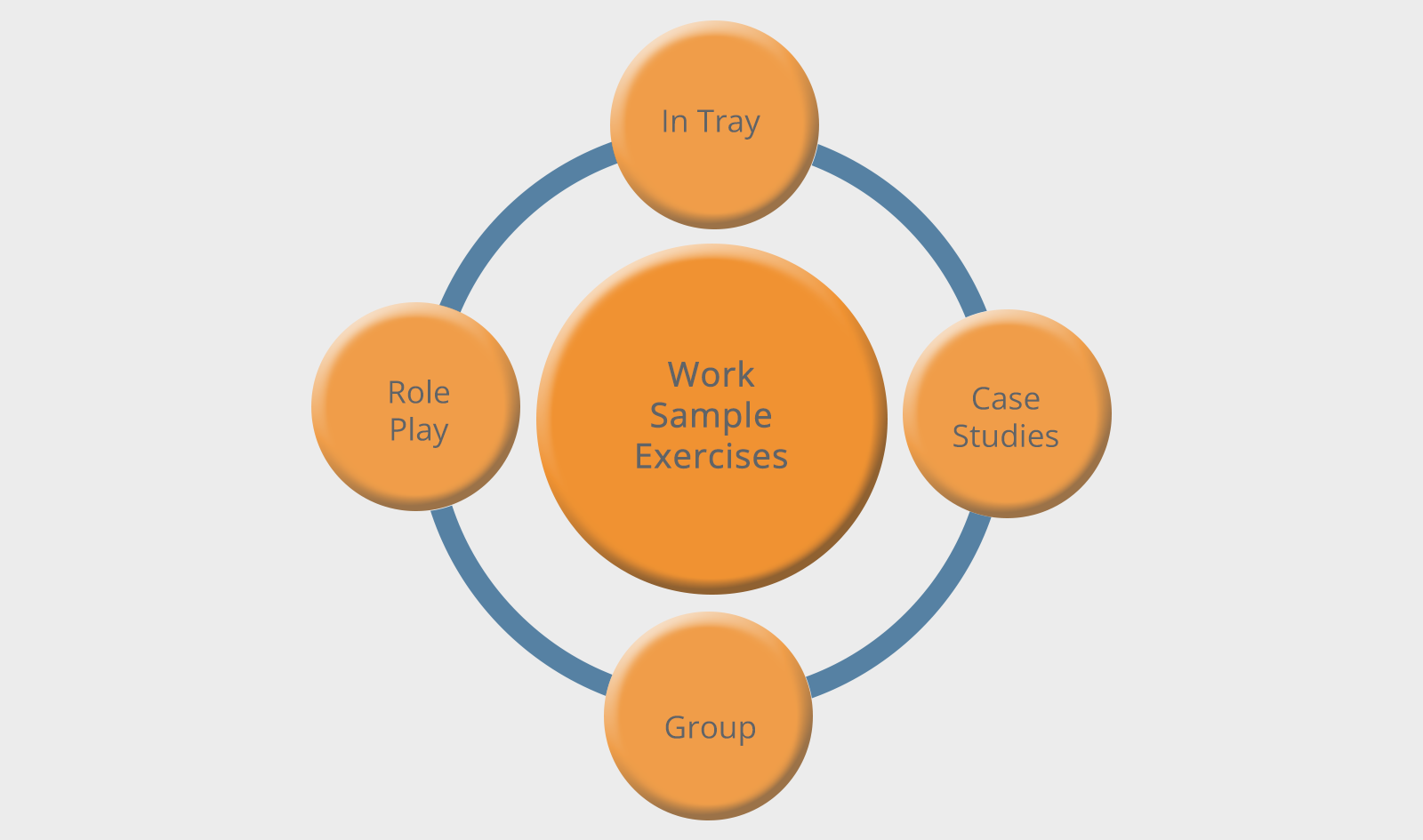
At the graduate or management level, work sample tests often involve one or more of the following:
Practice Aptitude Test with JobTestPrep

If you need to prepare for a number of different employment tests and want to outsmart the competition, choose a Premium Membership from JobTestPrep.
You will get access to three PrepPacks of your choice, from a database that covers all the major test providers and employers and tailored profession packs.
Work Sample Tests - In-Tray Exercises
If you are asked to do an in-tray exercise, you may be asked to assume a particular role as an employee of a fictitious company and work through a pile of correspondence in your in-tray.
These tests commonly measure job skills such as: ability to organize and prioritize work; analytical skills; communication with team members and customers; written communication skills; and delegation.
Work Sample Tests - Group Exercises
Group exercises involve candidates working together as a team, to resolve a presented issue.
These exercises commonly measure interpersonal skills such as group leadership, teamwork, negotiation, and group problem solving skills.
Group exercises may range from 'leaderless group discussion' formats to problem solving scenarios.
Work Sample Tests - Case Studies
Project managers may be asked to plan for the release of a new product.
This usually includes: devising a schedule, setting a budget and allocating resources.
This type of exercise measures your ability to: analyze data, consider a mixture of issues, offer multiple solutions, plan the project, and finally to present your findings using your presentation skills.
Work Sample Tests - Role Plays
You will usually be asked to assume a fictitious role and handle a particular work situation.
These types of exercises may measure: oral communication and influencing skills.
Role plays usually use professional actors as your co-respondent.
They are clearly briefed about their role and how to respond when you take a particular approach in the role play.
These types of exercise are usually performed at an assessment center.
This does not refer to a location, but to a process which is being increasingly used by organizations to assess staff, either as part of the recruitment process or for internal promotion.
The assessment center develops a set of varied exercises which are designed to simulate different aspects of the work environment.
These exercises usually last from half-a-day to two full days.
They are usually conducted at the employer's training facility or in facilities provided by the HR consultancy, that have been contracted to design and conduct the testing.
Clerical Level Work Sample Tests
Data checking tests are widely used to select candidates for clerical and data input jobs, particularly where accuracy is important.
This data to be checked may be either meaningless, for example account numbers, or may be fairly meaningful, for example, names and addresses.
In both cases is vital to check each character rather than ‘read’ the data normally.
You should also bear in mind that there may be more than one error in any single piece of data.
In addition to data checking tests, concentration tests are often used when selecting candidates for administrative and clerical jobs where mistakes can have serious or expensive consequences.
This includes areas like financial services, legal services and healthcare.