
Sample Fault Diagnosis Tests
Updated November 6, 2024


These tests are used to select technical personnel who need to be able to find and repair faults in electronic and mechanical systems.
Online Fault Diagnosis Test – Practice Test
Download Fault Diagnosis Test – Practice Test
As modern equipment of all types becomes more dependent on electronic control systems (and arguably more complex) the ability to approach problems logically in order to find the cause of the fault is increasingly important.
Practice Fault Diagnosis Test with JobTestPrep

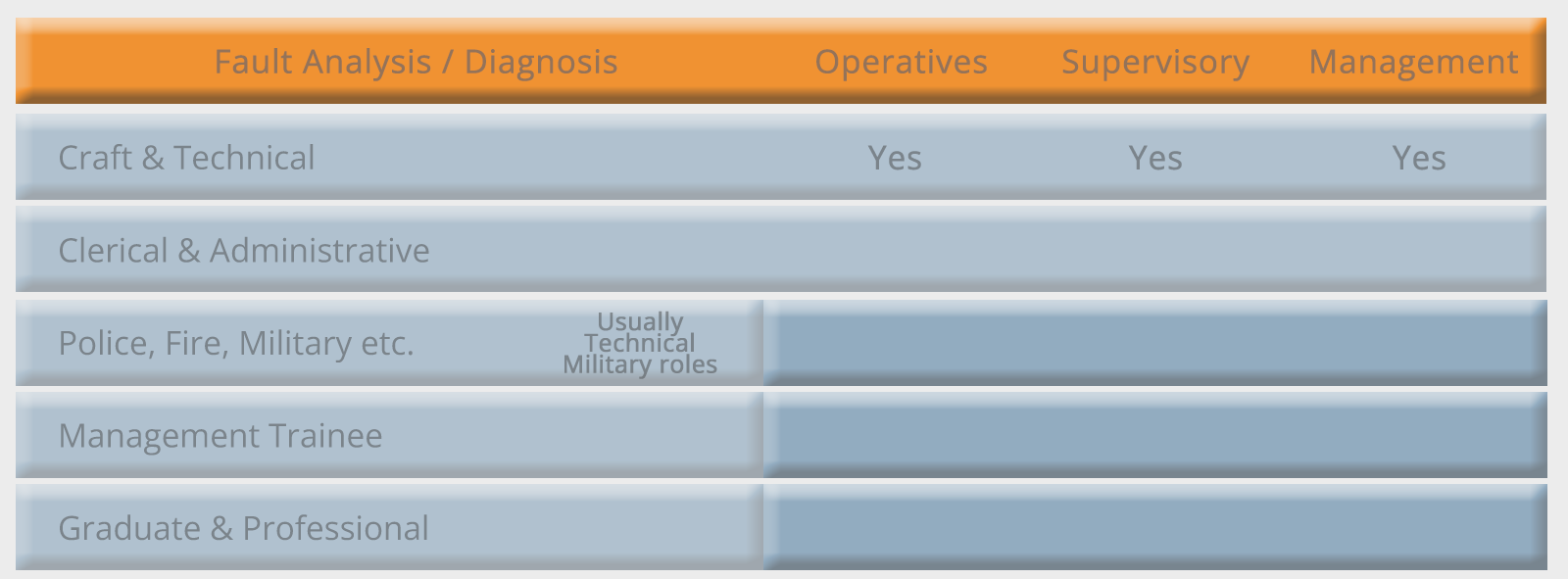
This type of test is used extensively to select technical and maintenance personnel as well as to select for artificer (technical) roles within the armed forces.
For example, aircraft technician.
Fault diagnosis tests usually form part of a test battery in which verbal reasoning and numerical reasoning also feature.
No specialised knowledge is required to answer these fault diagnosis questions (unlike mechanical reasoning )
This sample question paper contains 12 questions and has a suggested time limit of 10 minutes.
The questions are presented in Letter/A4 format for easy printing and self-marking.
Example Fault Diagnosis Question
There are two components to this question:
- A grid which describes the function of a series of switches
- A flowchart showing: input – switches – output
Each of the switches acts to alter the input before the next switch in the series.

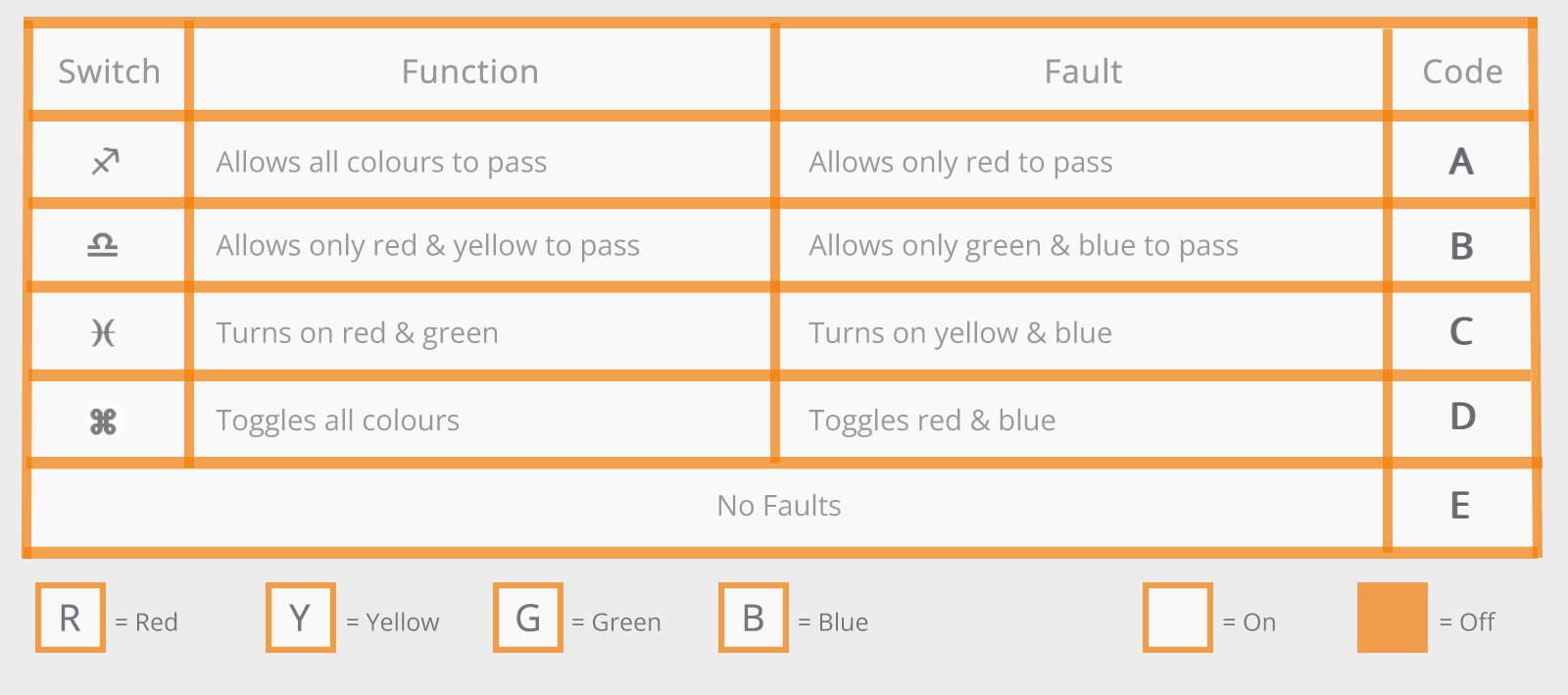
This grid shows four switches and their effect on four numbered inputs which may be either on or off.
The first switch (diamond symbol) inverts inputs one and two.
That is, if the input is on, it is turned off and if it is off it is turned on.
The other switches act in a similar way as detailed in the grid.
If a switch is not working then it has no effect on the input which passes through unchanged.
If you need to prepare for a number of different employment tests and want to outsmart the competition, choose a Premium Membership from JobTestPrep.
You will get access to three PrepPacks of your choice, from a database that covers all the major test providers and employers and tailored profession packs.

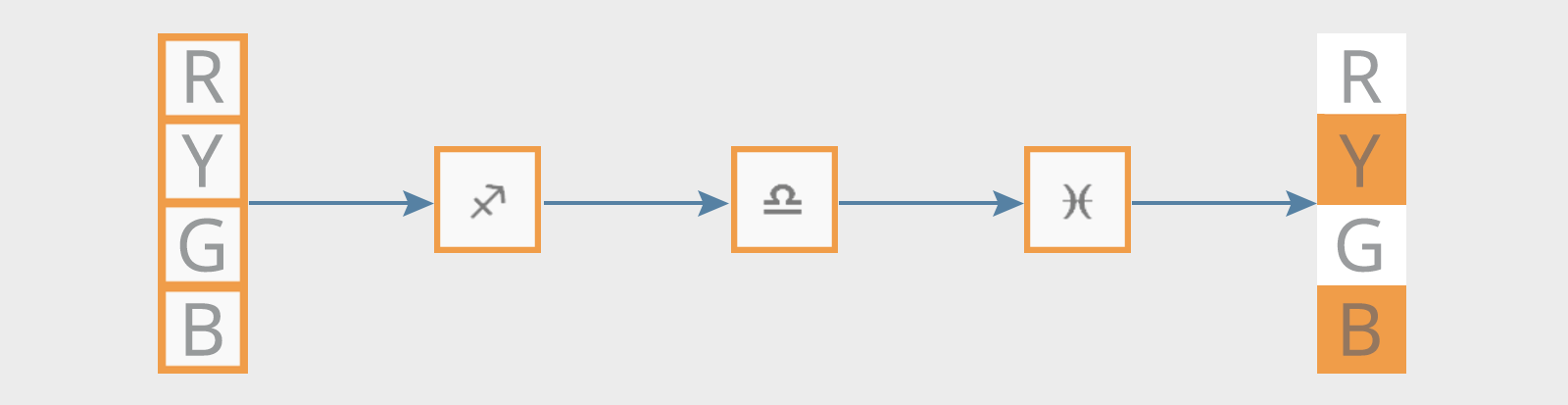
In this example flowchart, all of the inputs (numbered 1, 2, 3, 4) are on.
When these inputs pass through the first switch 1 & 3 are inverted (for example, switched off).
These modified inputs (1=off, 2=on, 3=off, 4=on) then pass through the second switch.
The second switch inverts inputs 3 & 4, which gives (1=off, 2=on, 3=on, 4=off).
These modified inputs (1=off, 2=on, 3=on, 4=off) then pass through the third switch.
The third switch should invert inputs 2 & 4, giving (1=off, 2=off, 3=on, 4=on).
Fault diagnosis tests are used to select technical personnel who need to find and repair faults in electronic and mechanical systems.
As modern equipment of all types becomes more dependent on electronic control systems (and arguably more complex), the ability to approach problems logically to find the cause of the fault is increasingly important.
This type of test is used extensively to select technical and maintenance personnel as well as to select for artificer (technical) roles within the armed forces—for example, aircraft technicians.
Fault diagnosis tests usually form part of a test battery in which verbal reasoning and numerical reasoning also feature.
No specialized knowledge is required to answer these fault diagnosis questions.
For each question on the fault diagnosis test, you are given a combination of diagrams representing switches and their uses.
The first is a grid that describes the functions of a series of switches. The second is a flow chart showing ‘input-switches-output'.
You need to decide how each switch works and if there are any errors.
While it is reported that no prior knowledge is needed, preparing for the fault diagnosis test will help you perform better.
To prepare:
- Familiarize yourself with the test and question format
- Find and complete online practice papers
- Study the principles of currents and switches
Typically, there is no pass or fail marks in psychometric testing. A company will assess the results and progress from the top percentile to the next recruitment stage.
The standard percentile range is 80% or above.
However, it is advised to aim for 100% as you don’t know how knowledgeable the other candidates are.
There is no pass or fail mark in the fault diagnosis test. Instead, an employer will invite the top percentile to the next stage of recruitment.
The employer will decide the percentile based on the performance of all the candidates.
If you take the test and most candidates score 90% or above, the employer may set the passing score as 95%.
If you take the test and the majority score between 50% and 70%, then the employer may accept anyone with 60% or above.
You will most likely also have an interview following the fault diagnosis test. Passing the fault diagnosis test does not guarantee you’ll get hired. It indicates that you have the appropriate knowledge and should be interviewed.
It is a combination of your interview, online application, and test results that will help you get hired.
There are several useful websites for helping you prepare for the fault diagnosis test, such as:
Fault diagnosis tests consist of 25 questions and have a 20-minute time limit meaning you have just over 40 seconds to analyze and answer each question.
Fault diagnosis is important because it ensures the safety and reliability of equipment and operations.
If a piece of equipment fails, a business may lose a lot of money through repairs, replacing the equipment, missed sales and time lost.
Yes, fault diagnosis can be learned. There are several methods, such as deep-learning-based and contrastive learning. How you learn will depend on your employer.
You do not need a comprehensive understanding of fault diagnosis to sit the entry-level test. The test assesses your basic understanding of faults to allow employers to determine your learning capability.